
About Us
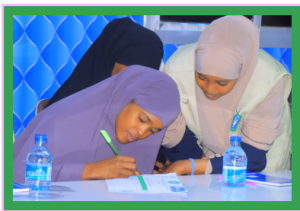
- Welcome to KAHRDO
founded on 7th July 2013
Kalkal Human Rights Development Organization (KAHRDO) is a Non-Governmental, Non-Political, Non-Partisan, and Non-Profit youth-led human rights organization established on 7 July 2013.
With over 10 years of experience, KAHRDO works to protect and promote human rights, advance women’s rights and gender equality, empower women and youth, strengthen access to justice, support child protection and GBV prevention, conduct research and advocacy, and implement inclusive humanitarian, peacebuilding, and development initiatives across South-Central Somalia.
BACKGROUND
Kalkal Human Rights Development Organization (KAHRDO) is a Non-Governmental, Non-Political, Non-Partisan, and Non-Profit youth-led human rights organization established on 7 July 2013. With over 10 years of experience, KAHRDO works to protect and promote human rights, advance women’s rights and gender equality, empower women and youth, strengthen access to justice, support child protection and GBV prevention, conduct research and advocacy, and implement inclusive humanitarian, peacebuilding, and development initiatives across South-Central Somalia.
VISION, MISSION, GOAL & CORE VALUES
VISION: A society that respects the fundamental rights and freedoms of all people for sustainable development.
MISSION: To contribute to a sustainable future by improving the social, economic and environmental well-being of communities, while promoting human rights, peace, protection and progressive realization of human rights.
GOAL: To build individuals and institutions that understand their rights and work together to enhance the development of their communities.
CORE VALUES
1. Transparency:
Open and responsible management of institutional and programme resources.
2. Neutrality:
Non-partisan action guided by humanitarian and human rights principles.
3. Accountability:
Clear responsibility to communities, partners, donors and public institutions.
4. Non-discrimination:
Equal respect for all people, including marginalized and vulnerable groups.
5. Participation:
Inclusive decision-making that values community voice and ownership
6. Commitment:
Consistent service to communities affected by crisis, rights violations and exclusion.
7. Partnership:
Mutual respect and collaboration with humanitarian, development, human rights and media actors.
8. Cultural respect:
Integration of positive Somali culture and Islamic values that support dignity, peace and social cohesion.
STRATEGIC OBJECTIVES AND IMPLEMENTATION APPROACH
KAHRDO’s strategic objectives are designed to link community protection, human rights, resilience and sustainable development. The organization prioritizes community engagement, evidence-based advocacy, service delivery, stakeholder coordination and institutional accountability.
- Plan and implement humanitarian responses according to clearly identified community priorities.
- Maximize sustainability of interventions, including during emergency response operations.
- Proactively engage communities and draw on their lived experiences to inform programme design.
- Protect vulnerable rural, urban and displaced populations from violence, exploitation and rights violations.
- Promote equal access to justice and provide services to victims and survivors of human rights violations.
- Monitor, investigate and document human rights abuses and violations in a responsible manner.
- Raise public awareness on human rights, civic rights, child rights and protection concerns.
- Build coalitions and networks to strengthen coordinated human rights and protection action.
- Advocate for policy and legislative reforms that uphold human rights standards.
- Provide human rights education, training and capacity strengthening for human rights defenders and community actors.
Implementation Principles
Community-driven planning | KAHRDO works with communities to identify needs, risks, capacities and priorities before implementation. |
Rights-based programming | Interventions are grounded in human rights, dignity, social justice, inclusion and non-discrimination. |
Protection-sensitive delivery | Activities are designed to reduce exposure to harm and support safe, dignified access to services. |
Partnership and learning | KAHRDO views partnerships as mechanisms for shared impact, institutional learning and capacity development. |
Sustainability and resilience | Emergency responses are designed where possible to strengthen longer-term community resilience and social cohesion |
GEOGRAPHIC COVERAGE
KAHRDO operates in South-Central Somalia with particular focus on Bay, Bakool, Lower Shabelle and Benadir. The organization collaborates with community structures, local authorities, civil society networks and humanitarian actors to address the specific needs of each location.
Region / Area | Operational relevance | Typical programme focus |
Bay | Primary operational base including Baidoa and surrounding communities. | Human rights, protection, GBV/CP, legal aid, advocacy, community mobilization and humanitarian response. |
Bakool | Crisis-affected communities with humanitarian and protection needs. | Protection, community awareness, access to justice, rights advocacy and resilience-oriented support. |
Lower Shabelle | Communities affected by displacement, conflict and recurrent shocks. | Human rights advocacy, protection mainstreaming, social cohesion and basic service referral support. |
Benadir | Urban and displacement-affected populations requiring coordinated response. | Protection, advocacy, youth and women empowerment, governance and partnership engagement. |
GOVERNANCE, STAFFING AND ORGANISATIONAL STRUCTURE
KAHRDO is governed by a three-member Board of Directors consisting of a Chairperson, Secretary and Member. The Board meets quarterly and provides oversight on strategic direction, institutional accountability, financial stewardship and policy implementation.
Operationally, KAHRDO is led by the Executive Director and supported by senior management, programme, operations, finance, procurement, human resources, security, MEAL and technical sector teams. The organization maintains 21 permanent staff and recruits project-based personnel according to programme size, scope and donor requirements.
Organizational Structure
Governance / Management Level | Key functions | Departments / roles |
Board of Directors | Strategic oversight, governance, policy direction and financial accountability. | Chairperson, Secretary and Member. |
Executive Leadership | Institutional leadership, representation, strategy implementation and partner engagement. | Executive Director, Operations Director and Programmes Coordinator. |
Programme and Technical Teams | Design, delivery and technical quality assurance of sector interventions. | General Protection Coordinator, GBV Officers, CP Officers, Case Workers, Human Rights Officers, Climate Change Officers, Education Officers, Health and Nutrition Officers, FSL/Resilience Officer and WASH Officers. |
Operations and Support Teams | Programme support, logistics, procurement, HR, finance, administration, ICT and security. | Finance Officer, HR Officer, Logistics and Procurement Officers, ICT Officers, Security Officers and Cleaners. |
MEAL Team | Monitoring, evaluation, accountability, learning, data quality and reporting support. | Senior MEAL Officer and MEAL Team. |
Human resource approach KAHRDO uses permanent staff for institutional continuity and project-based staff for operational flexibility, with recruitment conducted through interview-based selection processes. | ||
PARTNERSHIP, COORDINATION AND NETWORKING
KAHRDO views partnership as a collaborative relationship built around shared objectives, mutually agreed division of labour, learning and joint accountability. The organization prefers long-term, flexible and evolving partnerships that support impact, strengthen institutional systems and improve the quality of community-level programming.
KAHRDO is an active member of the Somalia NGO Consortium and participates in relevant humanitarian coordination platforms, including General Protection, GBV, Child Protection, Housing, Land and Property, Human Rights and Education cluster or forum structures at field and wider coordination levels.
FINANCIAL MANAGEMENT AND INTERNAL CONTROLS
KAHRDO maintains financial policies and procedures to guide financial transactions, budget control, donor reporting and accountability. The organization operates separate bank accounts for received funds and uses two to three signatories to strengthen internal control and reduce reporting errors.
Financial reports are prepared according to approved budget lines, grant contracts, expenditure categories and sources of funding. This system supports KAHRDO’s ability to meet donor reporting requirements and strengthen financial accountability.
Board oversight responsibilities | Project-level financial responsibilities |
Supervise project expenses and revenues. | Manage project financial plans according to activity plans. |
Review and supervise grant budgets. | Review expenditure documents, financial books and grant resources. |
Ensure expenses follow approved budget items and activities. | Ensure the accounting system aligns with agreed rules. |
Approve financial reports to donors. | Identify technical, administrative and financial issues and propose improvements. |
Supervise inventory and asset reporting. | Submit financial and non-financial reports to the Finance Department on time. |
Sign cheques and support internal audit processes. | Approve cheques issued from project accounts where authorized. |
Implement KAHRDO plans and policies regarding received funds. |
PROCUREMENT POLICY AND PRINCIPLES
KAHRDO’s procurement approach is based on open and effective competition, equal opportunity for prospective suppliers, value for money, transparency and public accountability. The organization applies prudent procurement methods to obtain goods and services in a manner that is fair, documented and aligned with donor expectations.
Principle | Practical meaning for KAHRDO procurement |
Fair competition | All bidders receive fair treatment and the same level of information when preparing quotations or tenders. |
Conflict of interest management | Any conflict of interest must be declared in accordance with KAHRDO’s code of conduct. |
Cost-effectiveness | Quotations and tenders are assessed on price, quality, supplier track record and accessibility to project locations. |
Transparency | Tender documents provide the necessary information to support appropriate and competitive submissions. |
Public accountability | Procurement staff are accountable for decisions involving donor funds and community resources. |
GENDER, PROTECTION AND GBV MAINSTREAMING
KAHRDO mainstreams gender, protection and GBV considerations across its programmes. This includes collecting sex-disaggregated statistics and qualitative information, conducting gender analysis, and assessing differences in roles, resource access, participation and decision-making power among women, men, boys and girls.
The organization considers diversity factors such as age, socio-economic status, displacement status and vulnerability when designing interventions. In WASH and community infrastructure interventions, KAHRDO applies protection-sensitive siting of facilities such as water points and latrines to reduce exposure to violence, harassment and other protection risks.
Mainstreaming commitments
Area | Commitment | Application |
Gender equality | Use sex-disaggregated data and gender analysis. | Inform programme design, participation strategies and access to resources. |
Protection mainstreaming | Avoid exposing communities to additional risks. | Consider safe locations, access barriers and dignity in service delivery. |
GBV risk mitigation | Integrate awareness and referral information into relevant activities. | Support safe, respectful and gender-sensitive engagement with communities. |
HIV and AIDS awareness | Include basic awareness and service information where relevant. | Mainstream health and risk information in community trainings. |
Inclusive participation | Recognize age, disability, socio-economic and vulnerability factors. | Promote community engagement that includes marginalized and vulnerable groups. |